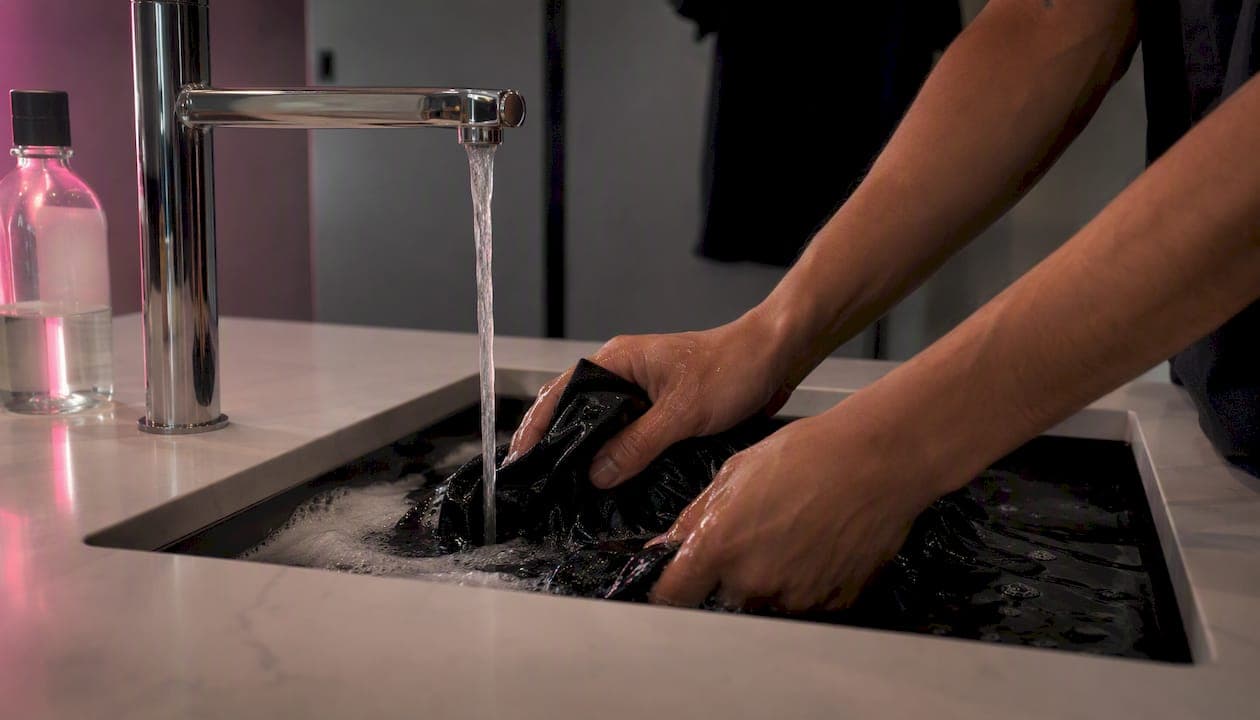
The safest routine to wash graphic tees and preserve prints: turn them inside-out, wash in cold water (at or below 86°F/30°C) on a gentle or delicate cycle, use a mild bleach-free liquid detergent, and air-dry. That's it. Every step below either reinforces that core routine or adjusts it for your specific fabric and print type.
Here's the quick version you can follow right now:
- Turn inside-out before loading the machine. Turning tees inside-out reduces drum friction directly on the print surface, which is the leading cause of abrasion damage.
- Cold water only. Water above 86°F breaks down the bonds in plastisol ink and accelerates cracking. Set your machine to cold.
- Gentle or delicate cycle. Less agitation means less mechanical stress on the print.
- Mild liquid detergent. Tide Free & Gentle is a solid everyday choice. Liquid dissolves fully in cold water; powder sometimes doesn't, leaving gritty residue that can scratch ink.
- Air-dry. Lay flat or hang inside-out, away from direct sunlight. Heat from a dryer is the fastest way to crack or peel a print.
Pro Tip: If you just bought or received a printed tee, wait 24 hours before the first wash. Fresh prints, especially DTG and heat transfers, benefit from a short cure period before hitting water.
Key Takeaways
Turning your graphic tee inside-out and washing it in cold water on a gentle cycle with a mild liquid detergent, then air-drying, is the single most effective routine to prevent cracking, fading, and peeling across all print types.
| Point | Details |
|---|---|
| Inside-out, every wash | Reduces drum friction on the print surface, the leading cause of abrasion damage. |
| Cold water (≤86°F / 30°C) | Protects ink bonds in plastisol, DTG, and vinyl prints; prevents shrinkage in cotton. |
| Mild liquid detergent | Tide Free & Gentle is a well-tested choice; avoid bleach, fabric softener, and enzyme-heavy formulas. |
| Air-dry away from sunlight | Heat from dryers and UV from sunlight are the two fastest ways to crack or fade a print. |
| Amaribandz merch care | Official Amaribandz apparel ships with care labels; follow them, and use this routine as your baseline. |
Table of Contents
- How fabric and print type change what your tee needs
- What does a safe machine-wash routine actually look like?
- When should you hand-wash instead?
- Drying and ironing without wrecking the print
- How to pretreat stains without damaging the print
- Cracking, peeling, fading: what causes them and what to do
- What detergent testing actually tells us about graphic tee care
- The case for conservative care
- Amaribandz merch is made to be worn and kept
- Useful sources
How fabric and print type change what your tee needs
Not all graphic tees are built the same, and the care routine that works for a 100% cotton screen-printed shirt may not be right for a polyester sublimation tee.
Fabric types at a glance:
Print types and what damages each:
- Screen print / plastisol: The most common type. Thick, slightly raised, slightly glossy. Cold water and gentle cycles are the primary protections against cracking and fading.
- DTG (direct-to-garment): Ink is bonded directly into cotton fibers, giving a soft, matte feel. DTG prints need cold water, liquid detergent, and air drying to stay intact. They're more vulnerable to enzyme-heavy detergents.
- Vinyl / heat transfer: Glossy, smooth, and clearly sitting on top of the fabric. The most heat-sensitive print type. Even a warm dryer can cause edges to peel. Check the Amaribandz guide on vinyl materials and durability for more context on how vinyl behaves under heat.
How to identify your print type: Run a clean finger across the design. Glossy and raised? Likely plastisol. Smooth and matte, almost like part of the fabric? Probably DTG or discharge. Clearly layered on top with sharp edges? Vinyl or heat transfer.
Pro Tip: Test a hidden inside seam before trying any new detergent or treatment. Rub a damp cloth with a small amount of detergent on the seam and check for color transfer or texture change. If anything looks off, go gentler.
What does a safe machine-wash routine actually look like?
Machine washing is fine for most graphic tees when you follow the right settings. Here's the full step-by-step:
- Turn the tee inside-out.
- Sort by color and weight. Don't wash with heavy items like jeans or towels — the friction and weight stress the print.
- Place delicate or freshly printed tees in a mesh laundry bag for extra protection.
- Set the machine to cold water and gentle or delicate cycle.
- Add a mild liquid detergent. Tide Free & Gentle works well for routine washes. For tees with heavier stains, Tide Ultra Oxi Powder can be used sparingly, but dissolve it in warm water first before adding it to a cold cycle. Both performed strongly across stain types in comparative testing.
- Use a moderate spin speed. High spin adds mechanical stress.
- Remove the tee promptly when the cycle ends. Sitting wet in a drum causes creasing and can stress print edges.
Machine wash settings reference:
| Setting | Recommended value | What to avoid |
|---|---|---|
| Water temperature | Cold (≤86°F / 30°C) | Warm or hot |
| Cycle type | Gentle / delicate | Normal, heavy-duty |
| Spin speed | Low to medium | High spin |
| Detergent type | Mild liquid, dye- and perfume-free | Powder in cold water, bleach, enzyme-heavy formulas |
| Load mix | Similar colors and weights | Jeans, towels, heavy fabrics |
Dos and don'ts:
- ✅ Turn inside-out every single wash
- ✅ Use cold water
- ✅ Choose a gentle cycle
- ✅ Use a mild liquid detergent
- ✅ Remove promptly after the cycle
- ❌ Never use chlorine bleach
- ❌ Skip fabric softener — it coats fibers and degrades ink over time
- ❌ Don't wash right-side-out if you care about the print
- ❌ Avoid repeated heat, bleach, and fabric softener exposure, which accelerates wear on all print types
When should you hand-wash instead?
Hand washing takes five more minutes and adds years to a print. It's worth it for vintage tees, large vinyl transfers, newly printed merch, or any shirt where the print looks like it might already be lifting at the edges.
Hand washing is the gentlest option for delicate or newly printed tees. Here's exactly how to do it:
- Fill a clean sink or basin with cold water.
- Add a small amount of mild liquid detergent and swirl to mix.
- Submerge the tee inside-out and let it soak for 10–15 minutes.
- Gently agitate the fabric with your hands. Focus on underarms and collar. For the print area, use light pressure only.
- If there's a stain near the print, dab it with a soft cloth. Never scrub directly on the design.
- Drain the soapy water and rinse thoroughly with cold water until no detergent remains.
- Press the tee gently against the side of the basin to remove excess water. Never wring or twist.
- Lay flat on a clean dry towel, roll the towel up with the tee inside, and press firmly. This pulls out most of the moisture without any twisting force.
- Unroll and lay the tee flat to air-dry, reshaping it while damp.
Pro Tip: The towel-roll technique removes enough water that most tees dry in a few hours without a dryer. It's especially useful for tri-blend and rayon-blend fabrics that distort easily when hung wet.
Drying and ironing without wrecking the print
Heat is the main enemy of printed tees. Most print damage that gets blamed on washing actually happens in the dryer or under an iron.
Air drying:
- Lay flat on a clean surface or hang inside-out on a plastic hanger.
- Keep out of direct sunlight. UV exposure fades both fabric dye and print ink over time, especially on discharge and water-based prints.
- Reshape the tee while it's still damp. Pulling the collar and hem back into shape before drying prevents distortion.
If you must use a dryer:
- Use the lowest heat setting or the air-only/no-heat cycle.
- Remove the tee while it's still slightly damp, then lay flat to finish drying.
- Never overdry. A bone-dry tee from a hot dryer is a cracked print waiting to happen.
Ironing:
- Never iron directly on a printed design. The heat melts plastisol, distorts vinyl, and permanently damages DTG ink.
- Iron inside-out on the lowest setting, or place a thin pressing cloth between the iron and the fabric.
- Steaming is the safest option for removing wrinkles from printed tees. Hold the steamer a few inches from the fabric and let the steam do the work.
- Shrinkage warning: cotton tees shrink most during the first hot wash or hot dry cycle. If your tee is 100% cotton and hasn't been pre-shrunk, cold washing and air drying are the only reliable ways to hold the original size.
How to pretreat stains without damaging the print
Stain removal is where people accidentally destroy prints. The instinct to scrub hard and use the strongest product available is exactly wrong when there's a graphic on the fabric.
Pretreat routine:
- Blot the stain immediately with a clean cloth. Dab, don't rub.
- For grease stains: apply a small drop of mild dish soap directly to the stain, let it sit for five minutes, then rinse with cold water before washing.
- For general stains near the print: use a color-safe oxygen-based spot treatment applied to the fabric around the print, not on top of it.
- Always spot-test on an inside seam first. Apply the product, wait two minutes, and check for color change or texture damage before treating the stain.
Detergent guidance:
- Use: Mild liquid formulas that are dye- and perfume-free. Tide Free & Gentle is a well-tested option for regular care.
- Use sparingly: Oxygen-based boosters like Tide Ultra Oxi Powder for targeted stain removal only. Not for every wash.
- Avoid: Chlorine bleach (destroys ink and fabric), enzyme-heavy detergents (break down DTG ink bonds), optical brighteners (alter color over time), and fabric softener (coats fibers and degrades prints).
A note on frequency: The more often you treat a tee with strong products, the faster the print wears. Reserve aggressive stain treatments for specific spots and go back to mild detergent for everything else.
Pro Tip: For odor without visible staining, a half-cup of white vinegar added to the rinse cycle is gentler on prints than any scented detergent and won't leave residue.
Cracking, peeling, fading: what causes them and what to do
Most print damage has a clear cause, and most of it is preventable.
Cracking: Caused by heat and over-drying. Plastisol ink becomes brittle when repeatedly exposed to dryer heat. Stop using the dryer, switch to air drying, and the cracking will slow. Existing cracks won't reverse, but you can stop them from spreading.
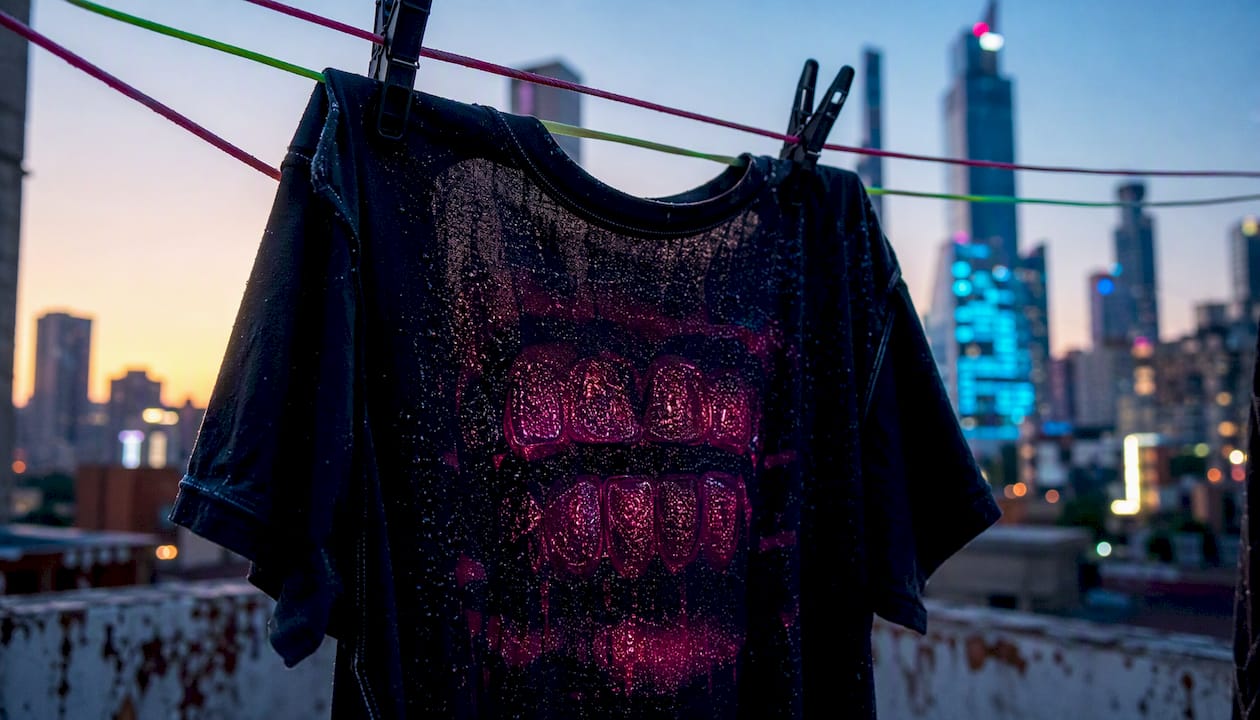
Peeling (vinyl / heat transfer): Peeling at the edges usually means the transfer was applied at too low a temperature, or heat has weakened the adhesive. Avoid any heat going forward. For small edge lifts, a fabric adhesive applied carefully under the lifted edge and pressed flat can extend the life of the print. Deeply peeling or mechanically cracked designs are past the point of repair.
Fading: Caused by UV exposure, hot water, bleach, and optical brighteners. Cold washing and keeping tees out of direct sunlight are the two most effective preventive steps. Washing cold and inside-out consistently ranks as the highest-impact habit across care guides.
Shrinkage: Happens in hot water and hot dryers, primarily with 100% cotton. Once a tee has shrunk, it won't fully recover. Reshape it while damp and lay flat to dry to minimize further distortion.
Prevention checklist:
- No dryer heat on vinyl or heat-transfer prints
- No bleach, ever
- Cold water every wash
- Inside-out, every wash
- Mild detergent only
What detergent testing actually tells us about graphic tee care
Comparative detergent testing across a wide range of stains and odors consistently points toward one practical conclusion: a dye- and perfume-free mild liquid detergent handles most everyday cleaning without the chemical load that accelerates print wear.
Tide Free & Gentle performed strongly across stain types in independent testing, making it a reliable default for printed garments. Tide Ultra Oxi Powder also performed well for heavier stains, but it's best reserved for targeted spot treatment rather than routine washing of graphic tees. Powder detergents in cold water can leave undissolved residue that acts as a mild abrasive against ink surfaces.
Practical recommendations:
- Default to Tide Free & Gentle (or a comparable dye- and perfume-free liquid) for every regular wash.
- Use Tide Ultra Oxi Powder only for specific stains, dissolved in warm water before adding to a cold cycle.
- Avoid any detergent with optical brighteners, enzymes targeting protein stains, or added fabric softener built in.
- No single detergent test covers every fabric and print combination. When in doubt, the conservative choice (gentler formula, cold water) is always safer for printed garments.
Testing covered a broad range of common household stains and odors. Results reflect general cleaning performance, not print-specific durability testing.
The case for conservative care
Most people wash their graphic tees the same way they wash everything else, and then wonder why the print looks rough after six months. The honest answer is that printed garments are a different category. The ink sitting on top of or bonded into that fabric is not as durable as the fabric itself, and the standard hot wash / dryer cycle that works fine for plain cotton is genuinely hard on it.
What I find underappreciated is how much of the damage happens in the dryer, not the wash. People switch to cold water and feel like they've done the work, then throw the tee in a hot dryer and undo most of it. Air drying is the step that actually moves the needle, and it costs nothing.
For fans who buy artist merch specifically, this matters more than it does for a plain white tee from a big-box store. The design is the point. A cracked or faded print on a piece of merch you bought to support an artist you care about is a real loss, and it's almost entirely avoidable with a few consistent habits. Check the care label when you get the piece, follow it, and when it says cold wash and hang dry, take that seriously.
Amaribandz merch is made to be worn and kept

Every piece of Amaribandz merch ships with a care label. Those labels aren't filler. They reflect the print method used on that specific garment, and following them is the fastest way to keep the design looking sharp through years of wear. The routine in this article is the baseline. When the care label on your Amaribandz piece differs from general guidance, the label wins.
If you've been holding off on buying merch because you weren't sure how to care for it, now you have the full picture. Browse the Amaribandz store and shop with confidence knowing exactly how to keep it looking new.
Useful sources
These are the core references behind the guidance in this article. When a manufacturer's care label conflicts with general advice, follow the label.
- How to Wash and Care for Screen Printed T-Shirts — Printable Press
- The Best Laundry Detergent — Wirecutter (NYTimes)
- How to Wash 100% Cotton Printed T-Shirts - Care Guide for Printed Tees | TechGeeksApparel
- How to Wash Graphic Tees: The Complete Care Guide (2026) — DTF Virginia
- How to use an iron — Real Simple
- How to wash graphic tees and hoodies — care guide | THE SUNYA
- How To Wash Graphic Tees | A Detailed Guide - Ninja Transfers
- How to Wash Graphic Tees Without Fading the Print: 7 Pro Tips - Shibtee Clothing