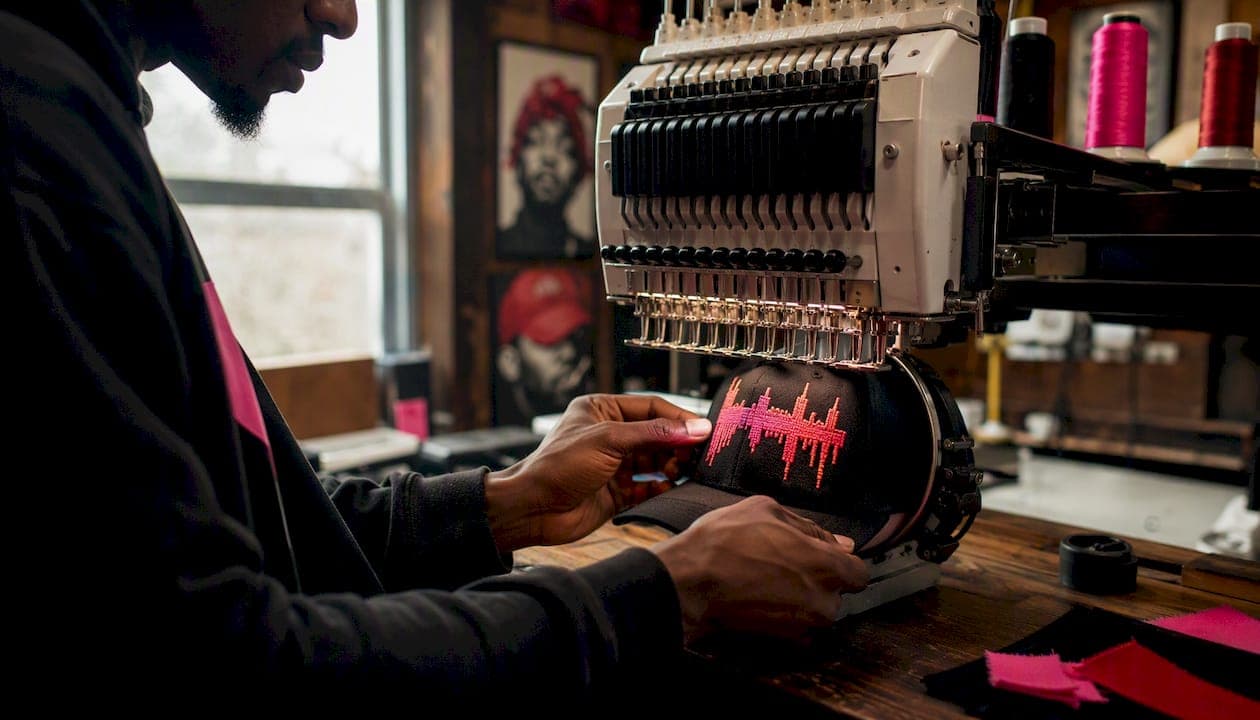
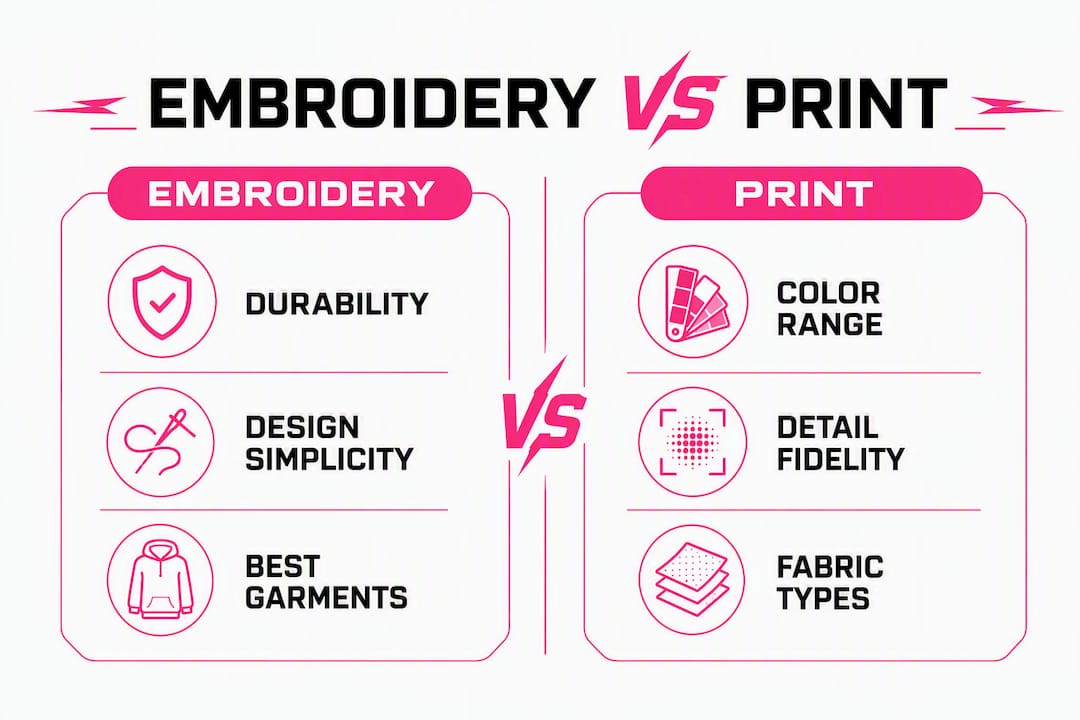
Pick embroidery for hats, structured jackets, and small premium logos you want to last for years. Pick print for full-art tees, photographic or gradient designs, and limited-edition drops. Those two sentences cover 90% of the decision. The rest is knowing why, and matching that logic to the specific pieces in the official Amari Bandz merch store.
Why it breaks down that way:
- Durability: Embroidery is stitched into the fabric and lasts the lifetime of the garment; printed designs fade or crack over time.
- Design fidelity: Print handles gradients, photos, and fine lines that thread simply cannot replicate.
- Garment type: Structured pieces (hats, polos, outerwear) hold embroidery well; lightweight tees are the natural home for print.
Table of Contents
- Embroidery vs print at a glance
- How each method actually puts a design on fabric
- Which method fits which Amari Bandz merch item?
- How long will your merch actually last?
- What each method can and cannot reproduce
- What merch actually costs and how long it takes
- Quick checklist: which method should you pick?
- Key Takeaways
- Why Amaribandz uses both methods
- Get official Amari Bandz merch and support the artist directly
- Sources and further reading
Embroidery vs print at a glance
| Dimension | Embroidery | Print (Screen/DTG/Sublimation) |
|---|---|---|
| Durability | Lifetime of garment | DTG fades in 40–80 washes, plastisol in 60–150, sublimation lasts as long as the garment |
| Design fidelity | Bold logos, text, simple shapes | Gradients, photos, fine lines | | Best garments | Hats, jackets, polos, patches | Tees, hoodies, all-over pieces | | Look & feel | Raised, textured, premium | Flat, vibrant, lightweight | | Cost per unit | stitch count drives price | ~$2–$5 per shirt at 100+ units | | Setup fee | digitizing is a one-time fee | Per-screen fee per color | | Minimums & lead time | Low minimums; typical turnaround time | Screen print needs volume; DTG from 1 unit | | Care | Machine wash cold, air dry | Inside out, cold wash, low heat | | Where to buy | Amaribandz official merch | Amaribandz official merch |
How each method actually puts a design on fabric
Understanding the mechanics helps you read product descriptions and spot quality differences in photos.
Embroidery starts with digitizing: a designer converts artwork into a stitch file (.dst, .pes, or .emb formats) that tells the machine exactly where each needle pass goes. That file is a one-time creation. The machine then stitches thread directly into the fabric, building up a raised design. Stitch count, not color count, is what drives the cost after that initial digitizing fee.
Screen printing works by pushing ink through a mesh stencil onto the fabric surface. Each color needs its own screen, so a four-color logo means four screens and four setup charges. Once screens are made, large runs become very cost-efficient.
DTG (direct-to-garment) printing works like an inkjet printer for fabric. No screens, no minimums. DTG is economical from a single unit and handles photographic detail on cotton-dominant garments.
Sublimation bonds dye directly into synthetic fibers at high heat. The color becomes part of the fabric rather than sitting on top of it, which is why sublimation lasts as long as the garment itself.
Which method fits which Amari Bandz merch item?
The Amaribandz brand aesthetic, dark minimalism with neon pink and red accents, plays differently depending on the item.
Structured pieces like logo caps and outerwear are natural fits for embroidery. Heavier fabrics like 8oz fleece, canvas, and structured polos hold stitching without puckering, and a raised wordmark on a black cap reads as premium in a way flat ink rarely matches. Think: embroidered Amari Bandz logo cap, clean and built to last.
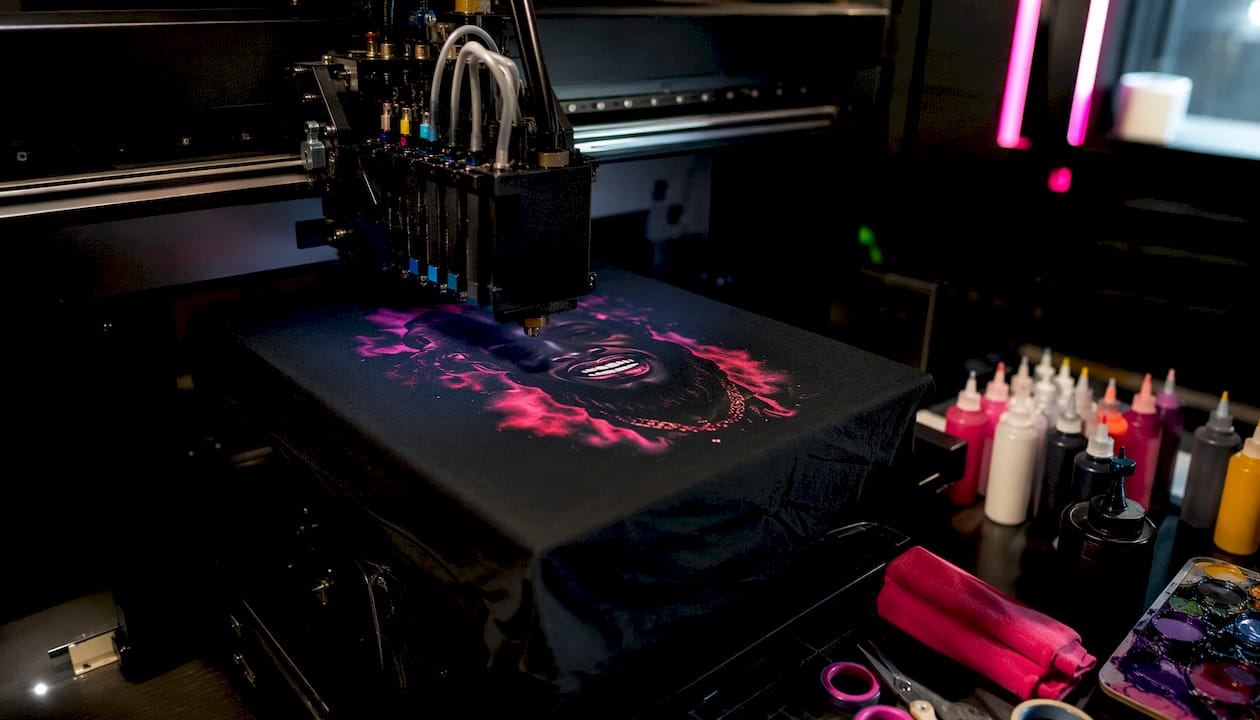
Full-back tees and art-forward hoodies are where print wins. Album artwork, neon gradient effects, and photographic imagery need DTG or screen printing to reproduce faithfully. Lightweight tees under 5oz can actually pucker under heavy stitch density, so print is the practical call there too.
For small accessories like tote bags, a printed graphic or an embroidered patch both work. Cotton tote bags are a good example of a surface where a bold printed design or a stitched patch can both land well depending on the art.
Logo cap (embroidered wordmark) vs. limited-drop album tee (printed full artwork): these are not competing products. They serve different fan needs. The cap is an everyday carry piece that should still look sharp in five years. The tee is a collectible, a snapshot of a specific release moment. Buy both from the official store and you're covered.
How long will your merch actually last?
This is where the methods separate most clearly.
| Method | Expected lifespan | Primary failure mode |
|---|---|---|
| Embroidery | Lifetime of garment | Thread wear at edges (rare with proper care) |
| Plastisol screen print | 60–150 washes | Cracking, fading |
| DTG | 40–80 washes | Fading, especially on dark garments |
| Sublimation | Lifetime of garment | Color shift if washed in very hot water |
Embroidery and sublimation both outlast the fabric itself under normal use. Screen print and DTG degrade with washing, though plastisol inks hold up considerably better than water-based DTG inks on dark shirts.
Pro Tip: Turn printed garments inside out before every wash. Cold water and low-heat drying extend a screen-printed or DTG design's life significantly. For embroidered pieces, skip the dryer entirely when possible — air drying prevents thread distortion over time.
What each method can and cannot reproduce
Design complexity is the single biggest factor most fans overlook when comparing merch photos.
- Embroidery minimums: strokes need to be at least 0.5 inches wide; text should be at least 1 inch tall. Anything finer gets lost in thread bulk.
- Screen printing: handles fine lines down to roughly 0.2 inches and reproduces photographic detail cleanly.
- Color handling: embroidery uses thread colors from a fixed palette (Madeira, Isacord, and similar thread brands offer hundreds of shades, but no true gradients). Screen and DTG printing can match PMS colors, reproduce neon accents, and blend tones continuously.
- Metallic and neon effects: metallic thread exists for embroidery, but neon and photographic color effects are far easier to achieve with print.
- Placement: chest logos and sleeve tabs suit embroidery; full-back prints and all-over patterns need print or sublimation.
What merch actually costs and how long it takes
Setup costs behave very differently between the two methods.
| Method | Setup fee | Per-unit cost | Minimum order | Typical lead time |
|---|---|---|---|---|
| Embroidery | digitizing is a one-time fee | $3–$8 per piece | Low minimum order quantities | typical production time |
| Screen print | Per-screen per color | ~$2–$5 at 100+ units | typical order quantities | typical production time |
| DTG | None | Higher per unit | 1 unit | production takes a few days |
The digitizing fee for embroidery is a one-time charge. Once that file exists, reorders cost nothing extra in setup, and adding more thread colors does not increase cost the way additional screens do in screen printing. For a fan ordering a single custom piece as a gift, DTG is the most accessible option. For buying official store inventory, the production economics are already handled.
For small-batch accessory bundles or limited drops, combining a DTG-printed insert with an embroidered patch is a common approach in entertainment merch programs.
Quick checklist: which method should you pick?
Choose embroidery if:
- You want a premium, long-lasting piece (hat, jacket, polo, patch)
- The design is a bold logo or wordmark with no gradients
- You're buying something to wear regularly for years
Choose print if:
- The design includes album art, photographic imagery, or neon gradients
- You're grabbing a limited-edition drop tee or hoodie
- You want a one-off piece without a minimum order
Next steps: check product photos on the Amaribandz merch page for close-ups of the decoration, read the product description for the method used, and message the store if you have questions about care or placement.
Key Takeaways
Embroidery outlasts print on structured pieces; print is the only method that faithfully reproduces gradients, photos, and neon artwork on tees and hoodies.
| Point | Details |
|---|---|
| Durability gap is real | Embroidery lasts the lifetime of the garment; DTG fades in 40–80 washes, plastisol in 60–150, sublimation lasts as long as the garment. |
| Design fidelity decides the method | Print handles gradients and fine lines; embroidery needs strokes at least 0.5 inches wide. |
| Garment type matters | Structured hats and jackets suit embroidery; lightweight tees under 5oz need print. |
| Cost crossover | Embroidery's $40–$100 digitizing fee is one-time; screen print becomes cheaper above roughly 100 units. |
| Buy from Amaribandz | The official merch store carries both embroidered and printed pieces, supporting the artist directly. |
Why Amaribandz uses both methods
The official shop carries stitched pieces and printed pieces because they do different things. A raised embroidered logo on a structured cap signals quality in a way that flat ink cannot, and it will still look sharp years from now. A full-art tee printed with album artwork captures a moment, a specific drop, a specific era of the music. Both belong in a real fan's collection.
The dark minimalism and neon accents that define the Amaribandz aesthetic translate differently through each method, and that contrast is intentional. Every purchase from the official store goes directly toward music production, touring, and new releases. That's not a disclaimer; it's the whole point of buying direct.
Get official Amari Bandz merch and support the artist directly
Every piece in the Amaribandz store is the authorized version, made to the spec the artist approved, with care instructions that actually match the decoration method used.
Check the official merch store for current embroidered and printed pieces. When you're browsing, zoom into the product photos to see the decoration up close, confirm the method in the description, and read the care tag before your first wash. Buying direct means the money goes to Amari, not a third-party reseller. For fans who want to go deeper, the full discography and streaming links are one click away.
Sources and further reading
- Screen Print vs Embroidery: 2026 Comparison, Arklavo — covers durability estimates, cost ranges, digitizing fees, and design minimums; backs the wash-cycle figures and per-unit cost data cited above.
- Embroidery vs Print for Company Apparel, FLYP — detailed breakdown of DTG, plastisol, and sublimation lifespan figures used in the durability table.
- Screen Printing vs. Embroidery on Custom Apparel, Swag.com — fabric weight guidance (8oz+ for embroidery) and structured-garment recommendations.
- Screen Printing vs Embroidery, Kornit Digital — technical overview of DTG as a screen-print alternative; useful for understanding print-method mechanics.
- Embroidery vs Screen Printing, Printify — practical guidance on screen setup costs and when high-volume runs favor print over embroidery.