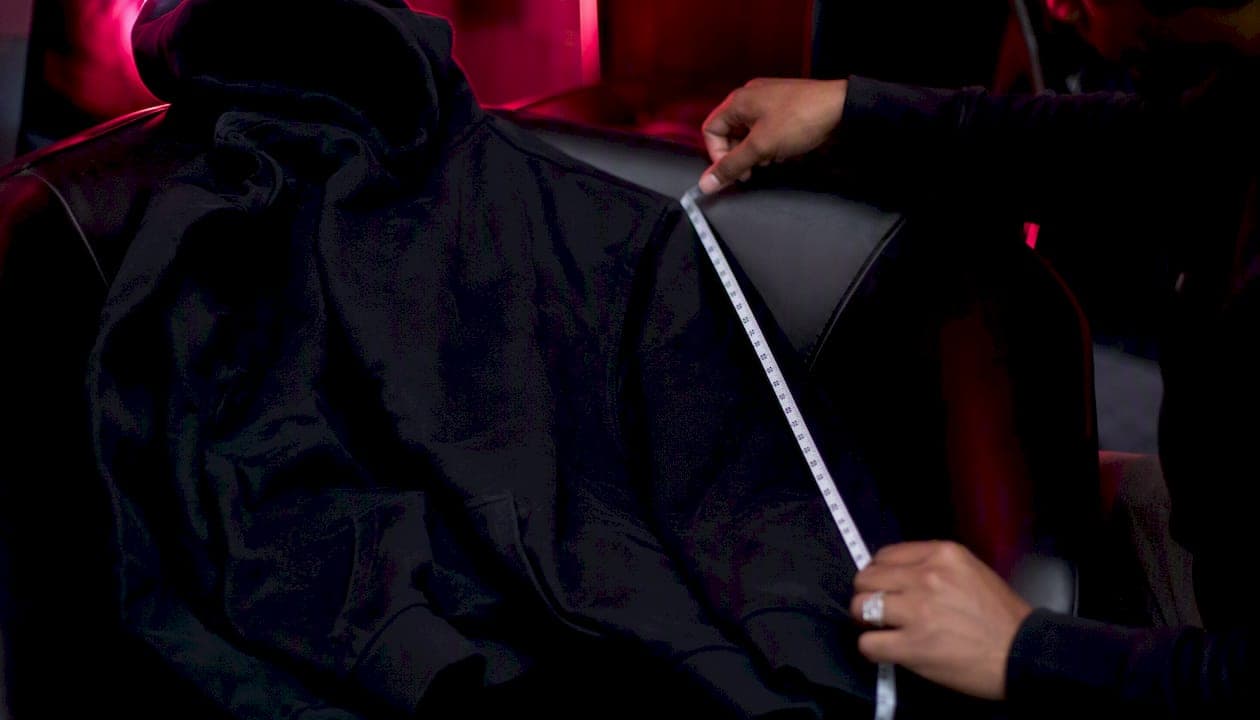
The single most reliable way to pick a hoodie size is to match your chest measurement to the garment's flat specs, not the letter on the tag. For standard U.S. unisex hoodies, the chest-to-letter mapping runs like this: S fits smaller chests, M medium chests, L larger chests, XL quite large chests, and XXL larger still. These are full chest circumference measurements, measured around the fullest part of your torso.
The one rule that prevents most sizing mistakes: measure a hoodie you already own pit-to-pit (underarm seam to underarm seam), double that number, and compare it to your body chest. According to MFG Merch's hoodie sizing guidance, a well-fitting hoodie typically adds some ease over your body measurement to allow for layering and comfort. So if your chest is 40", you want a garment with roughly a 44–46" full chest, which equals a 22–23" pit-to-pit.
Pro Tip: When you're forced to choose between two sizes, prioritize chest fit over body length. You can live with a hem that sits slightly higher or lower, but a hoodie that pulls across the chest never looks right.
Table of Contents
- How do you measure yourself and a hoodie correctly?
- Standard U.S. hoodie size chart with measurements
- How does fit style change which size you should pick?
- Key Takeaways
- Why measuring before you buy actually matters
- Get the right fit on Amaribandz hoodies
- Useful sources and further reading
How do you measure yourself and a hoodie correctly?
Getting the numbers right takes about three minutes and a soft tape measure. Here's the exact sequence.
Measuring your body:
- Wrap the tape around the fullest part of your chest, keeping it level across your shoulder blades at the back.
- Breathe normally, don't puff out, and read the measurement in inches.
- That number is your body chest circumference, the figure you compare to any brand's size chart.
Measuring a hoodie flat:
- Lay the hoodie on a flat surface with no wrinkles.
- Measure pit-to-pit: place the tape at one underarm seam, run it straight across to the other underarm seam. This is your flat chest width.
- Double that number to get the full chest circumference equivalent.
- Measure body length from the highest point of the shoulder seam (not the collar) straight down to the hem.
- For sleeve length, measure from the center back of the neck, across the shoulder seam, and down to the wrist cuff.
Worked example: If your body chest is 40" and you want a regular fit with 4–6" of ease, you're looking for a hoodie with a pit-to-pit of roughly 22" (44" full chest). That lands squarely in a size M on most U.S. unisex charts.
Shoulder seam position matters more than most shoppers realize. When the seam sits at or slightly past the edge of your actual shoulder, the sleeve hangs correctly and the chest panel lies flat. A seam that drops too far down the arm is a sign the hoodie is too large, regardless of what the chest measurement says.

Pro Tip: Measuring a hoodie you already love is more reliable than measuring your body alone. The garment captures the ease and construction built into that specific cut, so you're comparing apples to apples when you check a new brand's flat specs.
Standard U.S. hoodie size chart with measurements
The table below uses representative unisex pullover measurements drawn from Arklavo's pullover size chart and standard U.S. sizing conventions. Pit-to-pit figures are flat garment measurements; full chest is the doubled equivalent.
Before reading the table: some brands publish full chest circumference rather than pit-to-pit. Always check which measurement a chart uses before comparing numbers.
| Size | Body chest (in) | Pit-to-pit (in) | Full chest (in) | Body length (in) | Body length (cm) |
|---|---|---|---|---|---|
| S | 36–38 | — | ~40 | — | — |
| M | 38–40 | ~22 | ~44 | — | — |
| L | 40–42 | ~24 | ~48 | — | — |
| XL | 42–44 | — | — | ~30 | — |
| XXL | 44–46 | — | — | — | — |
A few notes on reading this table:
- The 4–6" difference between body chest and full chest reflects standard hoodie ease for a regular fit.
- Body length is measured from the high shoulder point to the hem, not from the collar.
- These are representative averages. Always pull the specific brand's flat specs before ordering, since construction varies.
- Height and weight are rough orientation tools only. A 5'10", 175 lb person typically lands in L, but chest measurement is the deciding factor.
How does fit style change which size you should pick?
Silhouette changes everything. The same 40" chest can wear three different sizes depending on the look.
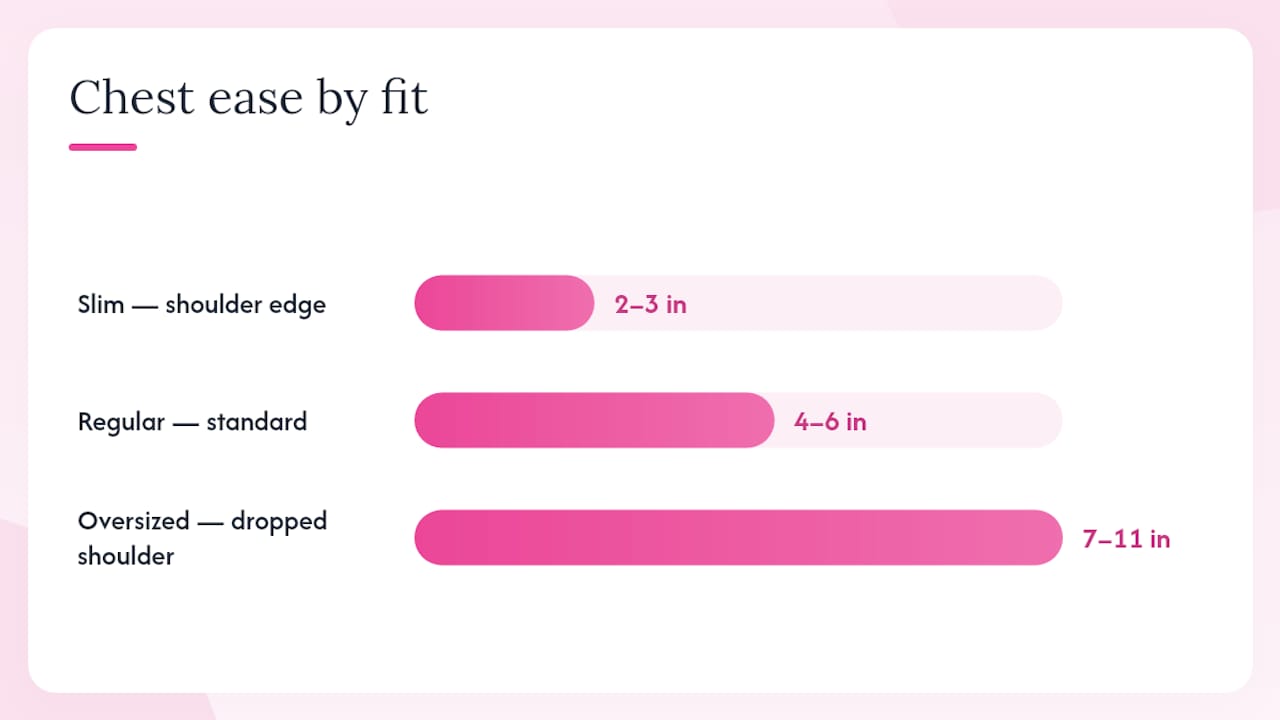
Slim fit adds roughly 2–3" of ease over body chest. The shoulder seam sits right at the edge of the shoulder, the chest panel is close but not tight, and the hem falls at the hip. For a 40" chest, that means a garment with a 42–43" full chest, which is a size M on most charts.
Regular fit is the standard 4–6" ease range covered in the size chart above. For a 40" chest, size L (full chest ~48") is the target. This is the cut most unisex hoodies are designed around.
Oversized fit typically adds 3–5" of extra chest width beyond regular fit, often combined with dropped shoulders and extended length. For a 40" chest, that means sizing up to XL or even XXL depending on how dramatic the drop is. Streetwear and heavyweight cuts can run significantly wider than standard-fit hoodies at the same label size, so always check the specific garment's flat measurements rather than assuming a letter translates directly.
Quick examples for a 5'10" person with a 40" chest:
- Slim look: size M (pit-to-pit ~22", full chest ~44")
- Regular look: size M (pit-to-pit ~22", full chest ~44")
- Oversized streetwear look: size L or XL, with dropped shoulders and extended hem
Key Takeaways
Matching your chest measurement to a garment's flat pit-to-pit specs is the most reliable way to choose a hoodie size across any brand or cut.
| Point | Details |
|---|---|
| Measure pit-to-pit first | Lay your hoodie flat, measure underarm to underarm, and double it to get full chest. |
| Allow 4–6" of ease | For a regular fit, your garment's full chest should be 4–6" larger than your body chest. |
| Size up for oversized or layering | Go one size up from your chart match for a streetwear silhouette or heavy layering underneath. |
| Unisex equals men's block | Women typically size down one letter for a closer fit, or stay true for a relaxed look. |
| Amaribandz merch sizing | Amaribandz publishes flat garment specs on every merch hoodie page so you can compare pit-to-pit before ordering. |
Why measuring before you buy actually matters
Most sizing frustration comes from trusting the letter on the tag. Labels are inconsistent across brands, and a size L from one manufacturer can have a full chest 4" wider than an L from another. The only number that doesn't lie is the flat garment measurement.
Here's what I've noticed with merch specifically: fans often assume their usual size will work, order without checking, and end up with something that fits awkwardly at the shoulders or sits too short. That's a return that didn't need to happen. For every Amaribandz hoodie, flat specs are listed directly on the product page, so you can compare pit-to-pit and body length to a hoodie you already own before clicking order. That one step eliminates most fit guesswork. If you're between sizes, the chest measurement wins. And if you want that oversized streetwear drape, size up one from your chart match and check the shoulder drop on the spec sheet.
Get the right fit on Amaribandz hoodies
Amaribandz hoodies are cut on a standard unisex block, which means the flat specs on each merch product page are your most reliable sizing tool. Measure a hoodie you already own pit-to-pit, double it, and compare that number to the garment's listed full chest. For a regular fit, size true to your chest measurement. For the oversized streetwear look, go one size up.

Every hoodie in the Amaribandz store includes flat measurements (pit-to-pit and body length in inches) so you can match numbers, not guess at letters. Members of the fan community also get early access to new merch drops with sizing details included. Head to the merch page to check the current hoodie specs and place your order with confidence.
Useful sources and further reading
- Men's Hoodies & Sweatshirts Size Charts | ASOS
- Hoodie Size Chart - MFG Merch
- Hoodie Size Chart: Pullover Measurements by Size – Arklavo
- Hoodie Sizing Guide 2026: Streetwear Fit | 6ix Merchandise
- Men's Hoodies Size Guide (centimeters)
- Your Guide to Unisex Hoodie Sizes for Custom Apparel – T-Shirt Envy Co.