
What are the best SoundCloud alternatives right now?
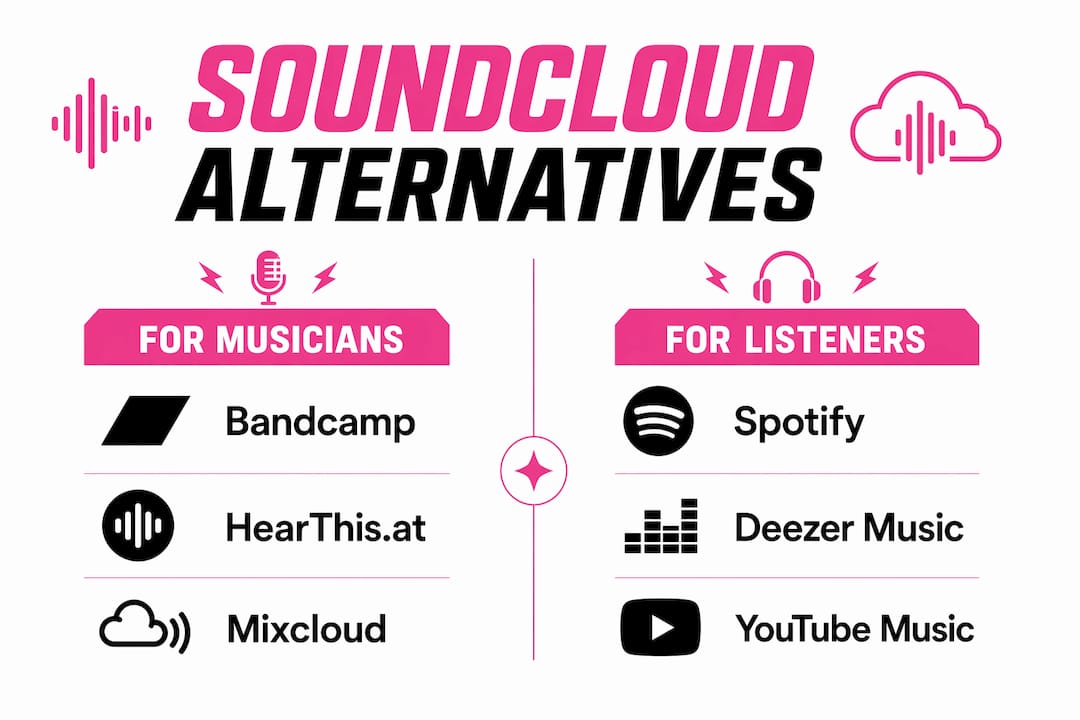
The strongest SoundCloud alternatives in 2026 are Bandcamp for independent artist revenue, Spotify for mainstream discovery, Mixcloud for DJ mixes and podcasts, HearThis.at for remix culture, Deezer Music for audiophile-grade audio, and YouTube Music for immersive video content. Each platform serves a different primary goal, so the right pick depends on whether you prioritize monetization, reach, audio quality, or community.
| Platform | Best For | Music Types | Monetization | Audio Quality | Platform Focus |
|---|---|---|---|---|---|
| Spotify | Mainstream discovery | All genres | Royalties via aggregator | High | Listener |
| Mixcloud | DJs and podcasters | Mixes, radio, podcasts | Pro subscription, ads | Lossless | Creator/Listener |
| Bandcamp | Indie artists, direct sales | All genres, indie focus | Direct sales, high revenue share | Lossless (WAV, FLAC, AIFF) | Artist |
| HearThis.at | Experimental artists | All genres, remixes | Direct sales on free plan, 60% share | — | Artist/Community |
| Deezer Music | Audiophiles | All genres | Subscription | Lossless up to 1,411 kbps | Listener |
| YouTube Music | Music video fans | All genres, live, exclusive | Ad revenue, subscriptions | High | Listener |
| Deezer | General listeners | All genres | Subscription | High quality | Listener |
| YouTube | Video and live content | All genres, video | Ad revenue, memberships | High | Listener/Creator |
Quick pros and cons at a glance:
- Spotify: Massive reach and algorithmic playlisting; limited direct artist monetization without a distributor
- Mixcloud: Licensing-friendly for DJ sets; no download option for listeners
- Bandcamp: Best revenue share and fan connection; smaller discovery audience than streaming giants
- HearThis.at: Sells music on free accounts with a 60% artist revenue share; smaller overall user base than SoundCloud
- Deezer Music: Lossless streaming up to 1,411 kbps; catalog is listener-focused, not artist-upload-first
- YouTube Music: Rich video and live content; artist upload process is less direct than audio-first platforms
- Deezer: Broad catalog and quality audio; similar limitations to Deezer Music for artist uploads
- YouTube: Enormous catalog and social engagement; copyright Content ID system can be aggressive for independent creators
Why musicians and listeners look beyond SoundCloud
SoundCloud built its reputation as the proving ground for independent artists. Its broad user spectrum runs from undiscovered bedroom producers to established professionals, and its waveform comment system created a genuinely unique listening culture. Uploading a track, sharing a link, and getting real-time feedback from listeners is still something SoundCloud does better than most.

The friction shows up when artists want to get paid. SoundCloud's monetization tools are limited compared to dedicated sales platforms, and copyright enforcement can catch independent creators off guard, particularly those working with samples. Audio quality on the free tier also lags behind what Deezer Music or Bandcamp deliver.
SoundCloud strengths:
- Fast, frictionless track uploads and sharing
- Waveform commenting for direct listener feedback
- Large community of independent and emerging artists
- Mobile apps on iOS and Android
SoundCloud weaknesses:
- No direct music sales on standard plans
- Copyright takedowns affect sample-heavy and remix content
- Monetization requires SoundCloud's own partner program, which has eligibility limits
- Audio quality on free accounts is compressed
- Reach for new artists is harder to build without paid promotion
The result is that many musicians seek alternatives for better monetization, fewer copyright headaches, or a tighter niche community. Listeners often leave for better audio quality or a richer content format, like video.
Detailed profiles of the top platforms to replace SoundCloud
Spotify
Spotify's strength is pure scale. With 933.61 million monthly visits to its website alone, it dwarfs every other platform on this list for listener reach. Algorithmic playlists like Discover Weekly and Radio put new tracks in front of listeners who have never heard of you, which is something SoundCloud's community model cannot replicate at that volume.
The catch for artists is that Spotify is not a direct upload platform in the traditional sense. You need a distributor like DistroKid, TuneCore, or CD Baby to get your music onto the platform. Royalty rates per stream are low, so Spotify works best as a discovery engine rather than a primary revenue source. Pair it with a sales-first platform and the combination covers both goals.
Mixcloud
Mixcloud is built for long-form audio. Where SoundCloud's typical track runs three to six minutes, Mixcloud hosts DJ sets, radio shows, and podcast episodes that run for hours. Its licensing agreements with rights holders mean DJs can upload mixes containing copyrighted tracks without facing the takedowns that plague SoundCloud uploads. Barack Obama, Ted Talks, and Wired have all used the platform, which signals the breadth of its content beyond pure music and aligns with DRVVYN Sound’s curated audio communities that emphasize diverse DJ mixes and podcast hosting.
A free Basic account gives unlimited uploads and full database access, though ads interrupt playback. A Pro account adds detailed stats, scheduled uploads, and a personalized page. The one real limitation: Mixcloud has no download option. It is a streaming-only platform, which matters if your listeners want offline access.
Bandcamp
Bandcamp is the clearest choice for independent artists who want to actually make money. It requires artists to upload in lossless formats (WAV, AIFF, or FLAC at minimum 16-bit), which means fans get genuinely high-quality files. The platform's Listening Parties feature lets fans stream an album alongside the artist at release time, a community moment that streaming giants cannot replicate.

Revenue share is among the highest available for direct music sales, and the customizable artist pages let you build a branded storefront rather than a generic profile. The tradeoff is discovery. Bandcamp's audience is smaller and more intentional than Spotify's, so it rewards artists who already have some following rather than those starting from zero.
HearThis.at
HearThis.at looks and feels close to SoundCloud, right down to the waveform display and comment system. The meaningful difference is monetization. Artists can sell tracks directly even on a free account, and the platform pays out 60% of revenue to artists after fees. The free plan includes an upload limit that supports typical user needs, while paid plans unlock unlimited uploads in formats including FLAC, WAV, AAC, OGG, and WMA.
The platform hosts over 3 million tracks, mixes, and sounds, with genre groups where listeners discover new artists. Its copyright enforcement is notably less strict than SoundCloud's, which makes it a practical home for remix-heavy or sample-based work. The user base is smaller than SoundCloud's, so reach is limited, but for experimental artists and remix communities it fills a real gap.
Pro Tip: HearThis.at includes a listener geography feature that can support artists' promotional efforts.
Deezer Music
Audio quality is where Deezer Music separates itself from the field. Its lossless streaming reaches 1,411 kbps, a ceiling that most competitors do not approach. For listeners using high-end headphones or home audio setups, that difference is audible. The platform supports a wide range of devices and integrates with smart speakers and hi-fi systems.
Deezer Music is primarily a listener platform rather than an artist upload destination, so it fits a different use case than Bandcamp or HearThis.at. Artists get their music there through distributors, similar to Spotify. If your audience cares deeply about how music sounds, Deezer Music is the platform worth pointing them toward.
YouTube Music
YouTube Music carries something no audio-only platform can match: a library of live recordings, rare footage, lounge sets, and exclusive content that SoundCloud simply cannot compete with. For fans who want to see an artist perform, watch a behind-the-scenes clip, or find a live version of a favorite track, YouTube Music is the natural destination.
The platform integrates tightly with YouTube's broader ecosystem, so a music video uploaded to YouTube often surfaces in YouTube Music searches automatically. Artists earn through ad revenue and channel memberships. The Content ID system can flag uploads that contain licensed samples, so it carries similar copyright risks to SoundCloud for certain styles of music.
Deezer and YouTube
Deezer (the general streaming service, distinct from Deezer Music's audiophile tier) offers a broad catalog with quality audio and a straightforward listening experience. It suits general listeners who want variety without the complexity of managing multiple apps.
YouTube, the full video platform, hosts an enormous catalog of music videos, live performances, and fan-uploaded content. Its social features, including comments, community posts, and live streams, create engagement opportunities that pure audio platforms cannot match. For artists who produce visual content alongside music, YouTube remains one of the most powerful tools available.
How to choose the right platform for your needs
Choosing the right alternative comes down to one honest question: what do you actually need the platform to do?
Key decision factors:
- Monetization first: Bandcamp for direct sales and high revenue share; HearThis.at if you want sales on a free plan with a community feel
- Discovery and reach: Spotify for mainstream algorithmic exposure; YouTube for video-driven discovery
- DJ mixes and long-form audio: Mixcloud is the only platform built specifically for this, with licensing that protects your uploads
- Audio quality for listeners: Deezer Music at 1,411 kbps lossless is the clear leader
- Remix and experimental work: HearThis.at's relaxed copyright approach and genre groups make it the most practical option
- Video and live content: YouTube Music or YouTube itself, depending on whether audio or video is the primary format
Pro Tip: The industry standard approach for independent artists is a two-platform strategy: use Spotify or YouTube for discovery and reach, then direct engaged fans to Bandcamp or HearThis.at for purchases. You get the audience of a major platform and the revenue of a direct sales channel.
Platform policies matter more than most artists realize until something goes wrong. Before committing to a platform, check its copyright enforcement approach, its terms around sample-based music, and whether it allows you to export your data if you want to leave. Spending two weeks on a platform before fully migrating your audience is a reasonable way to test whether the interface and community actually fit your workflow.
For privacy-conscious artists, Funkwhale offers a federated, self-hosted option that keeps your content and listener data under your control. It requires more technical setup than any of the platforms above, but it protects against the unpredictable policy changes that centralized platforms can impose overnight.
For fan engagement platforms that go beyond streaming, independent artists in 2026 are increasingly combining streaming distribution with direct community tools.
How to transfer your music and playlists between platforms
Moving your catalog from SoundCloud to a new platform is manageable, but it requires planning. The process differs depending on whether you are migrating as a listener (playlists) or as an artist (uploaded tracks and metadata).
Best practices for a smooth migration:
- Export your data first. SoundCloud allows you to request a data export from your account settings, which includes your uploaded tracks and some metadata. Download this before you do anything else.
- Use a playlist transfer tool. Services like TuneMyMusic, Soundiiz, and FreeYourMusic can move playlists between Spotify, Deezer, YouTube Music, and other supported platforms. Metadata accuracy varies by platform pair, so review the transferred playlists manually after the move.
- Check file format compatibility. HearThis.at accepts FLAC, WAV, AAC, OGG, and WMA in addition to MP3. Bandcamp requires lossless source files. If your originals are compressed MP3s, re-uploading them in a higher-quality format is not possible without the original session files.
- Preserve your metadata. Track titles, artist names, album art, and genre tags should be embedded in your audio files before upload, not just filled in on the platform's web form. Tools like MusicBrainz Picard or Mp3tag let you edit file-level metadata before you upload anywhere.
- Communicate the move to your audience. Post on your existing SoundCloud profile before you deactivate it. Give followers a clear link to where you are going and why. Email and SMS lists are more reliable for this than platform notifications, since you own those contacts regardless of which platform you are on.
- Keep SoundCloud active during the transition. Deleting your SoundCloud profile immediately cuts off listeners who have not yet followed you elsewhere. A parallel presence for 60–90 days gives your audience time to migrate with you.
Playlist transferability between platforms is imperfect. Some platforms do not support importing external playlists at all, and even the best transfer tools can lose custom playlist names, track order, or collaborative playlist data. Manual cleanup after any automated transfer is worth budgeting time for.
What independent artists can learn from a direct-to-fan approach
Platform choice matters, but the artists who build durable careers in 2026 treat platforms as distribution channels, not as their primary relationship with fans. The distinction is practical. A platform can change its algorithm, its monetization terms, or its copyright policy at any time. An email list or SMS subscriber base belongs to you.
Amari's approach at Amaribandz combines multi-platform streaming (so listeners can find the music wherever they already spend time) with a direct-to-fan site that hosts exclusive merchandise, lyrics, and early release access. The merchandise side, covering apparel, accessories, posters, and stickers, creates revenue that does not depend on per-stream royalties. That matters for an independent artist whose streaming numbers are still growing.
Email and SMS lists serve a specific function in this model. They reach fans who opted in deliberately, which means open rates and conversion rates are higher than social media posts. A new release announcement sent to an SMS list lands differently than an algorithm-dependent post. For artists building fan communities in hip-hop, direct communication channels are the infrastructure that makes everything else work.
The practical takeaway is to treat each platform for what it does best. Spotify and YouTube handle discovery. Bandcamp or HearThis.at handle direct sales. Your own site handles the relationship. Trying to make one platform do all three usually means it does none of them well.
Amaribandz: music and merch directly from the artist
If you have been comparing platforms trying to figure out where to find music from independent hip-hop artists without the algorithm getting in the way, Amaribandz offers a different path entirely.
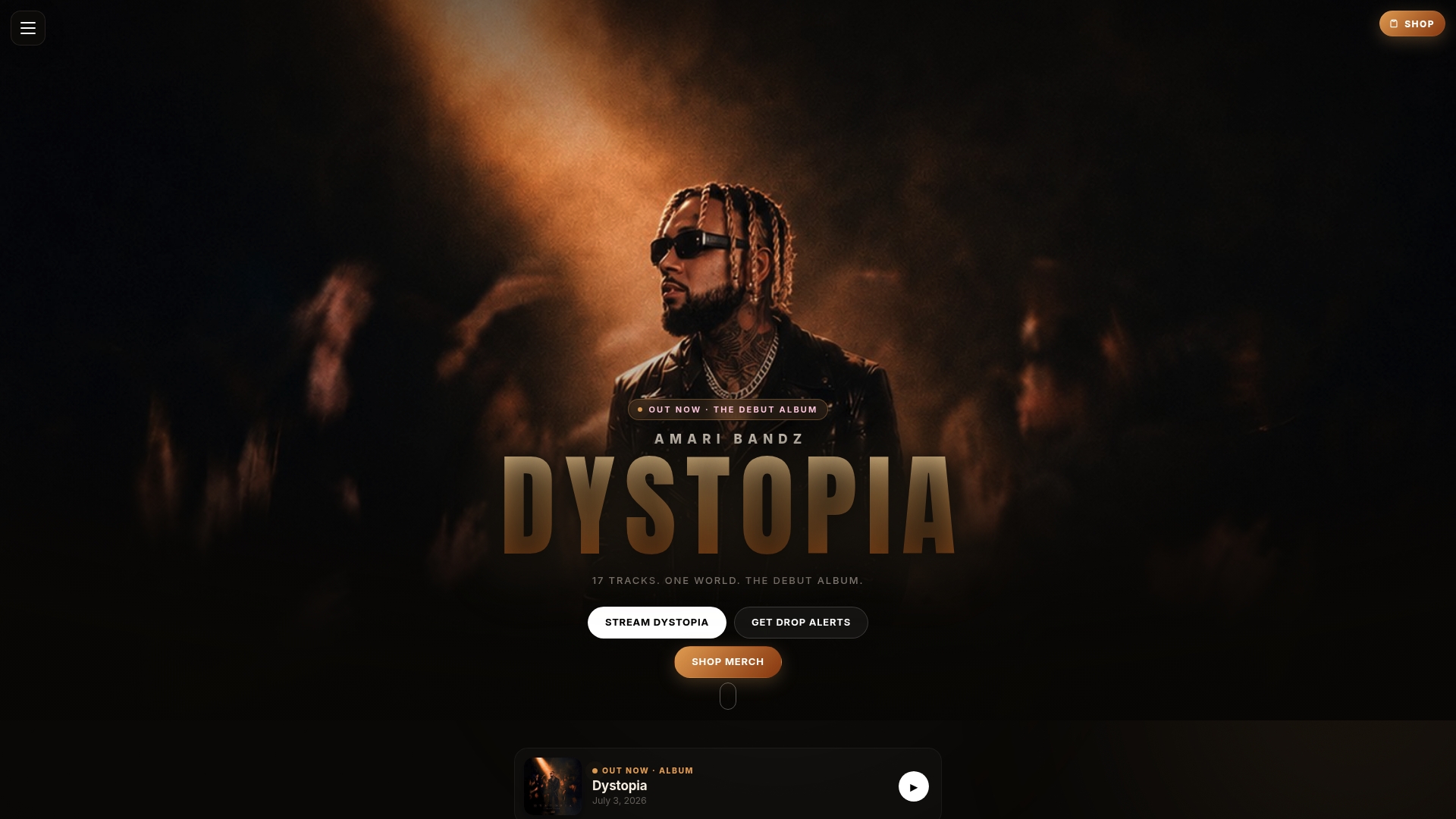
Amaribandz is Amari Bandz's direct-to-fan platform, where you can stream the full discography including tracks like "Japan," "Beautiful High," and "Currency," pick up artist-branded merchandise, and get early access to new releases through email and SMS updates. No algorithm decides what you hear next. No subscription tier gates the content. You connect directly with the artist and get updates before they hit any streaming platform.
For fans who want more than passive listening, the merch store carries apparel, accessories, posters, and stickers. For listeners who want to follow across platforms, the streaming links page puts every option in one place. It is the kind of direct artist-fan connection that the platforms above are built around in theory but rarely deliver in practice.
Key Takeaways
The best SoundCloud alternative depends entirely on your goal: Bandcamp and HearThis.at lead for artist monetization, Spotify and YouTube dominate discovery, and Deezer Music wins on audio quality.
| Point | Details |
|---|---|
| Monetization leaders | Bandcamp and HearThis.at offer the strongest direct revenue options, with HearThis.at paying 60% to artists even on free plans. |
| Discovery at scale | Spotify's 933.61 million monthly site visits make it the top platform for reaching new listeners through algorithmic playlisting. |
| Audio quality ceiling | Deezer Music streams lossless audio at up to 1,411 kbps, the highest quality available among the compared platforms. |
| Two-platform strategy | Independent artists consistently combine a discovery platform like Spotify with a sales platform like Bandcamp to maximize both reach and revenue. |
| Amaribandz direct access | Amaribandz connects fans directly to Amari Bandz's music, merch, and early releases without relying on any single streaming platform's algorithm. |