
What is fan revenue and why does it matter?
Fan revenue is the total income a sports or entertainment organization generates by engaging and monetizing its fanbase across ticket sales, merchandise, digital content, and sponsorships. It is not a single line item. It is the sum of every commercial touchpoint between an organization and the people who care about it.
Why does it matter so much right now? Because traditional revenue models are under pressure. Broadcast deals fluctuate, stadium attendance is weather-dependent, and social media platforms own the audience relationship. Fan revenue, by contrast, is built on direct connections your organization controls. Research highlighted by PwC shows that owned digital platforms generate more than double the revenue of social media activity for sports organizations.
The organizations that treat fan revenue as a core commercial discipline, not an afterthought, are the ones building durable businesses. Here is what that discipline looks like in practice:
- Ticket sales: Direct and digital ticketing tied to fan data capture
- Merchandise: Physical and digital products sold through owned channels
- Digital content: Subscriptions, pay-per-view, and exclusive access tiers
- Sponsorships: Partnerships priced and structured around engagement data
- Loyalty programs: Points-based systems that compound spending across all streams
Three authority sources worth knowing: the Dizplai Sports Fan Revenue Calculator, a free tool that quantifies untapped revenue from anonymous fans; PwC, whose sports industry research benchmarks digital monetization performance; and Berlin Growth Advisory, which advises clubs on commercial fan strategy. Each approaches the problem differently, but all start from the same premise: you cannot grow what you cannot measure.
How to measure fan revenue accurately
The most common mistake organizations make is confusing reach with revenue potential. A club might have 320,000 social followers but only 68,000 usable, consented records in a CRM. That gap is lost revenue, not a vanity metric.
The Club Revenue Formula, developed by Matthias Werner and detailed by Highblock, links four variables directly to income: contactable fans, conversion rate, purchase frequency, and average order value. Run it for both ticket and merchandise streams separately, then combine them for a full commercial picture. The math is deliberately simple so any commercial team can run it in a spreadsheet.
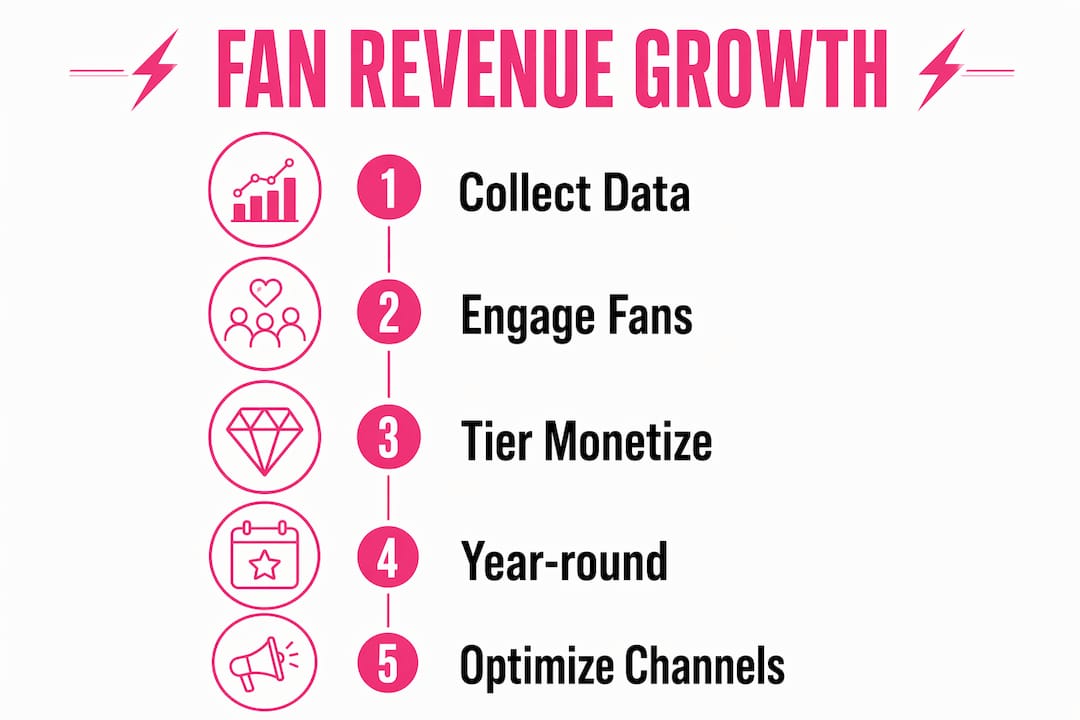
Growing contactable fans by 10% produces a proportional revenue increase without changing prices or conversion rates. That is the cleanest lever in the formula. A club with 70,000 contactable fans growing to 77,000, with everything else held constant, sees revenue rise by roughly the same 10%.
The Dizplai Sports Fan Revenue Calculator makes this visible in minutes. You input your audience size, current revenue, and growth target; it outputs your known-versus-anonymous fan split, revenue per fan, and the additional annual income you could unlock. Dizplai's research found that one in three rights holders loses between $1 million and $5 million annually because they cannot identify or directly reach the majority of their audience, and 62% estimate that figure at over $100,000 per year.
- Contactable fans: CRM records with consent, not raw social followers
- Conversion rate: Percentage of contactable fans who make a purchase in a given period
- Purchase frequency: How many times per season a buyer transacts
- Average order value: Mean spend per transaction across tickets and merchandise
- Revenue per known fan: Total direct fan revenue divided by contactable fan count
Pro Tip: Track one number monthly: Contact Rate = Contactable Fans divided by total Reach. Aim for steady lifts of 1–2 percentage points per month. That single metric tells you whether your data capture efforts are working before revenue moves.
CRM platforms and customer data platforms (CDPs) are the infrastructure behind all of this. A well-implemented CRM centralizes every ticket sale, merchandise purchase, and event signup under a single fan profile, making segmentation and targeting possible at scale.
Fan engagement drives revenue more directly than most executives realize
Engagement is not a soft metric. Fans who describe themselves as "fanatics" spend 6 times more annually than casual fans. The fans who vote, predict, participate, and return week after week are the same fans who buy merchandise, renew memberships, and upgrade to premium content.

The El Paso Locomotive soccer team put this into practice. After partnering with FanCompass to build a digital fan database from scratch, FanCompass-sourced fans contributed to approximately 20% of all ticket sales, representing over 10% of total ticket buyers and 17% of total ticket revenue. Those fans also showed a higher propensity to buy season tickets: 57% of FanCompass ticket buyers purchased season tickets compared to 48% of total Locomotive ticket buyers.
The lesson is not that one platform wins. It is that structured, year-round engagement with first-party data collection converts passive followers into buyers. Social media engagement matters, but only when it feeds a CRM you own.
Pro Tip: Build your fan engagement calendar around 12 months, not just the competitive season. Clubs that run engagement programs in the off-season maintain warmer audiences and see higher conversion rates when ticket sales open.
Proven strategies to grow and monetize fan revenue
The most effective organizations do not rely on a single stream. They build compounding systems where each revenue channel reinforces the others.
Tiered membership models capture different willingness-to-pay segments without alienating casual fans. A free tier builds the contactable base. A low-cost tier ($3–$10 per month) converts active fans into paying supporters. A mid-tier offering with exclusive content, early access, and community membership generates the most revenue per fan at volume. Tiered memberships with varying perks are widely recognized as the optimal structure for monetizing loyalty while preserving authenticity.
Premium fan experiences command the highest per-transaction value. Behind-the-scenes access, exclusive player interviews, VIP matchday packages, and early ticket access all tap into the same psychology: paying fans want to feel like insiders. PwC research confirms that companies focused on personalization and exclusive digital content expand revenue at 1.7 times the pace of their peers.
Fan sponsorship opportunities become far more valuable when backed by engagement data. The global sports sponsorship market was valued at $70.2 billion in 2025 and is projected to reach $96.45 billion by 2030. App-based sponsorships are gaining share because they offer something traditional placements cannot: click rates, participation numbers, and audience insights that prove return on investment to sponsors.
Statistic: A 3-point lift in conversion rate can translate to hundreds of thousands of dollars in annual revenue without changing prices or growing the audience.
- Merchandise integration: Place your store inside owned digital platforms where fans are already engaged, not on a separate site requiring extra steps
- Digital content subscriptions: Exclusive video, audio, and written content creates recurring income from fans who cannot attend in person
- Loyalty programs: Points earned across purchases, votes, and attendance create a habit loop that keeps fans commercially active between events
- Private and early-access ticketing: Exclusive ticket sales for members reward loyalty and drive urgency
- Concert and event discounts for loyal fans: Structured ticket discount programs tied to membership tiers increase purchase frequency
Pro Tip: Do not activate every revenue model at once. Start with the stream most natural to your organization: sponsorship if you have existing commercial partners, merchandise if fans are already buying, or premium content if you have exclusive access to offer. Add streams as your fan database grows.
How Amaribandz turns direct-to-fan connections into real income
The direct-to-fan model is not exclusive to major sports franchises. Amaribandz, an independent hip-hop artist blending melodic elements with traditional rap, demonstrates how the same principles apply at the artist level, and why they work.

The economics of superfan monetization favor artists who go direct. Spotify data shows that an artist's most active listeners make up roughly 2% of monthly listeners but generate over 18% of streams and more than half of all merchandise purchases. A single superfan can generate $400–$2,000 in annual revenue across music purchases, merchandise, and live experiences. Compare that to streaming, where an engaged fan generates roughly $0.50–$2.00 annually.
Amaribandz builds this kind of depth through a direct-to-consumer platform that connects fans to music, merchandise, and exclusive updates without a middleman. Fans can access tracks like Japan, Beautiful High, and Currency across streaming platforms, then convert into buyers through artist-branded apparel, accessories, and collectibles available at amaribandz.com/merch. Email and SMS lists capture first-party fan data for future monetization through exclusive offers and tour announcements.
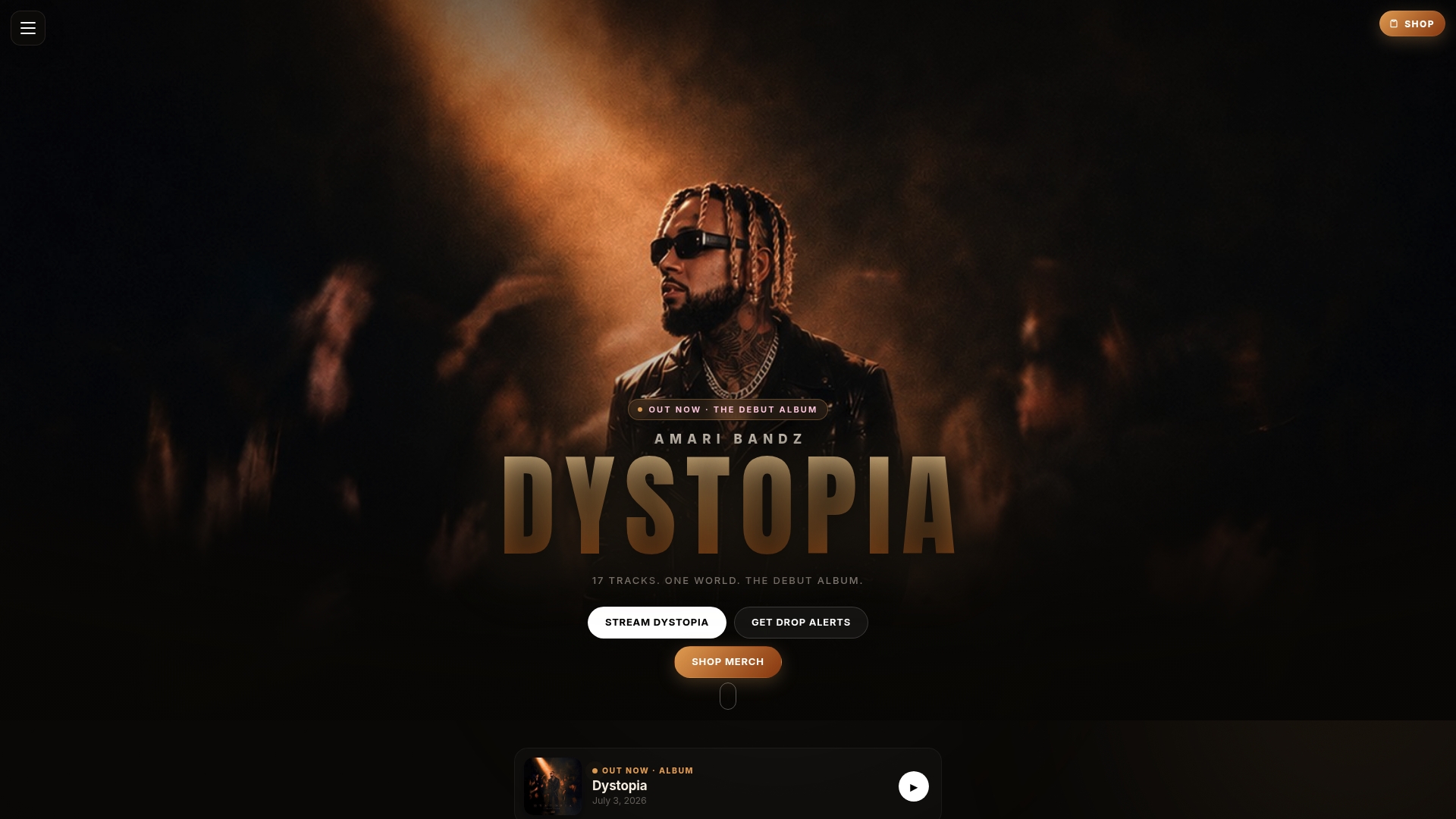
The model works because it treats every fan touchpoint as a data capture opportunity and every data point as a future revenue signal. Fans who sign up for exclusive updates are warmer buyers. Fans who buy merchandise once are more likely to buy again. The community Amaribandz builds around new releases and exclusive content is the same asset a sports club builds around matchday. Explore the full music catalog and exclusive fan content directly on the artist's platform.
Best practices from the Amaribandz direct-to-fan model that apply across music and entertainment:
- Own your fan data: Email and SMS lists give you direct access that no algorithm can remove
- Sell merchandise through your own platform: Margins are higher and you capture buyer behavior data
- Use exclusive releases to reward loyalty: First access to new tracks or limited merchandise drops converts casual listeners into superfans
- Build community around content: Fan engagement platforms that connect fans to each other deepen loyalty faster than one-way content delivery
- Treat subscriptions as a relationship, not a paywall: Fans who subscribe for exclusive updates feel invested in the artist's growth, not just consuming content
- Segment your audience by engagement depth: Not all fans spend the same; identify your top 2% and build specific offers for them
Key Takeaways
Fan revenue grows fastest when organizations combine owned data, tiered monetization, and year-round engagement into a single compounding system rather than managing each stream in isolation.
| Point | Details |
|---|---|
| Measure contactable fans first | Growing your CRM database by 10% produces a proportional revenue increase without changing prices or conversion rates. |
| Conversion rate is the fastest lever | A 3-point lift in conversion rate can translate to hundreds of thousands of dollars in annual revenue. |
| Superfans drive outsized returns | Roughly 2% of an artist's audience generates over 18% of streams and more than half of merchandise purchases. |
| Owned platforms outperform social | PwC research shows owned digital platforms generate more than double the revenue of social media activity for sports organizations. |
| Direct-to-fan works at any scale | Artists with under 5,000 followers can generate $30,000 or more in direct revenue by converting 1–5% of their audience into paying superfans. |