The top Bandcamp alternatives for supporting independent hip-hop artists right now
If you want to put real money in an independent hip-hop artist's pocket, you have more options than ever. Bandcamp proved fans will pay directly for music they love, but its recent acquisitions by Epic Games and then Songtradr have left a lot of artists and fans looking for something more stable. The good news: a wave of platforms has emerged to fill that gap, each with a different philosophy on fees, ownership, and fan connection.
Here is a quick look at the strongest options available to US fans right now:
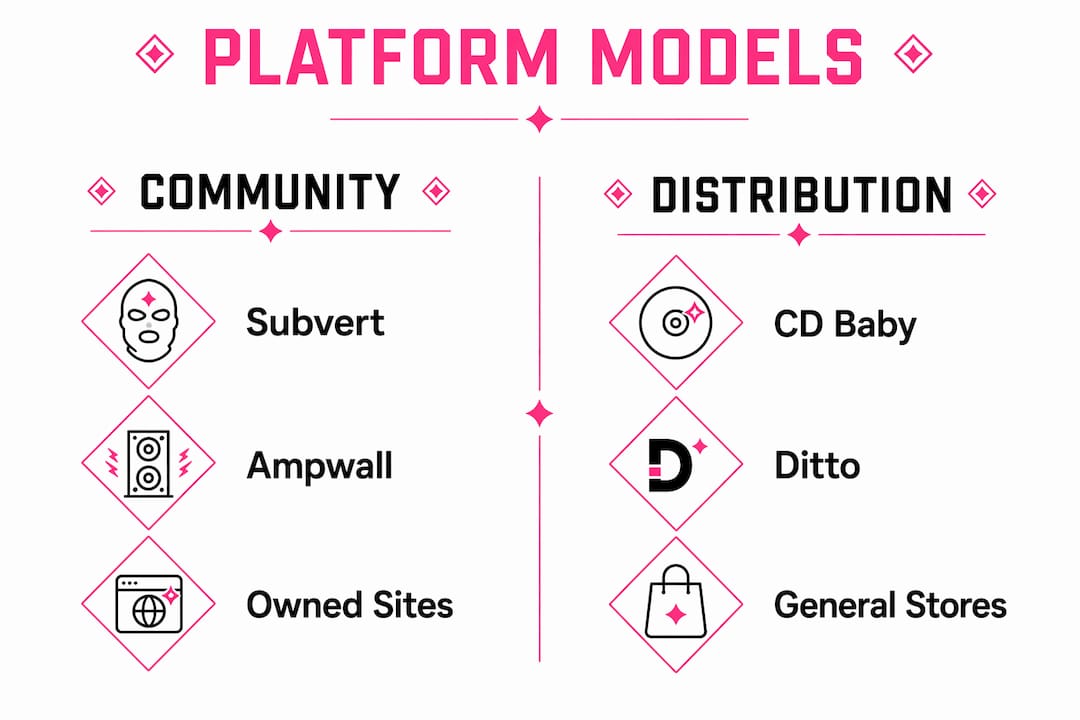
- Subvert — a collectively owned cooperative marketplace positioning itself as the direct Bandcamp replacement, with co-ownership open to artists, labels, and supporters
- Ampwall — a public benefit company built by DIY musicians, charging artists a low annual fee with upload limits, with fans able to cover the artist's transaction fee at checkout
- Artcore — a genre-specific platform for electronic and dance music fans, offering full-length previews, BPM and key metadata, and artist-set pricing
- CD Baby — a distribution service that has paid over $1 billion to independent artists since 1998, placing music on numerous streaming and download services for a one-time fee per release
- Ditto Music — a distributor pushing releases to 150+ platforms including Spotify, Apple Music, TikTok, and Audiomack, with artists keeping 100% of royalties
- Squarespace — a general website builder that lets artists sell music and merch from their own domain, though it lacks a built-in music player and fan-specific tools
- Shopify — a full e-commerce platform giving artists complete control over their storefront, fan data, and merchandise sales with no revenue share on sales
- Amaribandz — Amari Bandz's own direct-to-fan platform, where fans can stream music, buy exclusive merch, and sign up for email and SMS updates directly from the artist
Table of Contents
- How each platform actually works for fans and artists
- Why platform ownership models matter more than fees alone
- How Amaribandz uses direct-to-fan to build real community
- How you can best support independent hip-hop artists beyond Bandcamp
- Key takeaways
How each platform actually works for fans and artists
Understanding the model behind each platform tells you more than any feature list. The core split is between marketplaces (where fans discover new artists alongside others), owned websites (where the artist controls everything), and fan-centric tools (built specifically for the artist-fan relationship).
Subvert and Ampwall: community-first marketplaces
Subvert is built as a cooperative. A $100 buy-in gets supporters co-ownership of the platform, the ability to influence its features, and a physical zine outlining its goals. Labels like Warp and Polyvinyl have already joined. The pitch is simple: if the platform is collectively owned, no corporate acquisition can gut it. Ampwall takes a different structural approach as a public benefit company, which legally limits how much outside investor pressure can reshape its mission. Both platforms let fans pay directly to artists, and Ampwall specifically lets fans choose to cover the artist's revenue share at checkout, which is a genuinely thoughtful touch.
Artcore: built for a specific sound
Artcore sits between a general marketplace and a specialist record store. It targets electronic and dance music fans specifically, offering full-length high-quality previews (something many competing services skip), streaming, and metadata including BPM and key analysis. Artists set their own prices. The platform claims artists can keep up to 93% of revenue. The trade-off is that the upload and management tools still need work, and the platform runs lean on staff, which slows feature development.
CD Baby and Ditto Music: getting music everywhere
These are distribution services, not direct sales platforms. CD Baby's one-time fee model means no annual renewal surprises, and its track record of paying out over $1 billion to artists since 1998 carries real weight. Ditto Music uses a subscription model and pushes releases to a large number of stores, including Audiomack and Boomplay, which matter for hip-hop audiences specifically. Neither platform replaces a direct sales channel, but both put an artist's catalog on every major streaming service where fans already spend time.
Squarespace and Shopify: owning the whole thing
No single platform replaces Bandcamp perfectly, which is why many artists pair a distribution service with an owned website. Squarespace produces clean, professional sites and handles basic e-commerce, but it has no built-in music player or release publishing tools. Shopify goes deeper on e-commerce, giving artists full control over product pages, fan data, and checkout, but it also requires more setup. The real advantage of both: your fans are on your domain, not someone else's.
Pro Tip: If you want to support an independent hip-hop artist most directly, buying from their own website or a cooperative marketplace like Ampwall puts a higher percentage of your money in their hands than streaming alone ever will.
| Platform | Model | Revenue to artist | Genre/community focus | Direct fan support |
|---|---|---|---|---|
| Subvert | Cooperative marketplace | Not yet public | All independent music | Co-ownership, direct sales |
| Ampwall | Public benefit marketplace | High (fan can cover fee) | DIY/independent | Fan-covered transaction fees |
| Artcore | Genre marketplace | Up to 93% | Electronic/dance | Direct sales, streaming |
| CD Baby | Distribution | 100% after one-time fee | All genres | Streaming placement |
| Ditto Music | Distribution | 100% royalties | All genres | Streaming placement |
| Squarespace | Owned website | 100% (minus processing) | Artist's own audience | Direct sales, merch |
| Shopify | Owned website/store | 100% (minus processing) | Artist's own audience | Full e-commerce, merch |
| Amaribandz | Direct artist platform | 100% to artist | Hip-hop | Merch, email/SMS, exclusives |
Why platform ownership models matter more than fees alone
The shift happening right now in independent music goes beyond transaction percentages. Artist dissatisfaction with platform stability has pushed the conversation toward mission and ownership structure, not just who takes the smallest cut.
Relying on a single third-party platform exposes artists to exactly what happened with Bandcamp: a sale, layoffs, and a slow erosion of the features that made the platform worth using. Cooperative models like Subvert and public benefit structures like Ampwall are direct responses to that vulnerability.
The fee math compounds quickly. Platform fees stack on top of payment processing fees, so a platform advertising a low commission rate still costs more than it appears once Stripe or PayPal takes its share. Zero-commission platforms shift all costs to flat processing fees, which stay constant regardless of how much you sell. For a fan buying a $20 album, that difference might be a few dollars. For an artist selling hundreds of copies, it adds up fast.
New platforms face a real challenge: a better revenue share means nothing if the audience is not there yet. A higher cut on a small number of sales comes with limited financial advantage. The platforms that will matter long-term are the ones that build genuine communities, not just better math.
The core tension in 2026: emerging platforms offer fairer economics but smaller audiences, while established distribution services offer reach but no direct fan relationship. The artists winning right now use both.
How Amaribandz uses direct-to-fan to build real community
Amaribandz is a case study in what direct artist ownership looks like in practice. The official site at amaribandz.com gives fans a single destination for streaming links, exclusive merch, song lyrics, and direct updates via email and SMS. Tracks like "Japan," "Beautiful High," and "Currency" are accessible across multiple streaming platforms, but the direct site is where the real fan relationship lives.
The merch store sells apparel, accessories, posters, and stickers directly, with no marketplace middleman taking a cut. Fans who sign up for email or SMS updates get first access to new releases and exclusive offers, which is exactly the kind of fan data ownership that direct-to-fan success depends on. When an artist owns that list, no platform acquisition can take it away.
- Music streaming links to all major platforms in one place
- Exclusive merchandise sold directly, with full revenue to the artist
- Email and SMS list for early access to releases and tour announcements
- Lyrics pages that deepen fan engagement beyond just listening
- A brand identity (dark minimalism, neon accents, bold typography) that makes the site feel like an extension of the music itself
Pro Tip: Signing up for an artist's email or SMS list is one of the most underrated ways to support them. It costs you nothing, gives the artist direct access to you without an algorithm in the way, and often comes with early release access or exclusive discounts.
How you can best support independent hip-hop artists beyond Bandcamp
Supporting an independent artist well means thinking about where your money and attention actually land.
- Buy directly when possible. A purchase from an artist's own site or a cooperative marketplace puts more money in their hands than a stream ever will.
- Subscribe or tip on fan-centric platforms. Platforms that support tipping or subscriptions let you set a recurring level of support that artists can actually plan around.
- Join the email or SMS list. Platform algorithms can bury an artist's new release. A direct list bypasses that entirely.
- Buy merch. Physical merchandise from an artist's own store carries a higher margin than digital downloads on most third-party platforms, and you get something real in return.
- Follow on multiple channels. If a platform shuts down or changes terms, artists need fans who can find them somewhere else. Following across platforms protects that connection.
- Check platform transparency. Before buying through a new marketplace, look at its ownership model and fee structure. Community-owned or public benefit platforms tend to be more stable long-term.
Key takeaways
No single platform replaces Bandcamp for every need; the most effective approach combines an owned direct site with complementary distribution and community marketplace tools.
| Point | Details |
|---|---|
| No one-size-fits-all replacement | Artists and fans benefit most from combining owned websites with distribution services and community marketplaces. |
| Ownership model matters | Cooperative and public benefit platforms like Subvert and Ampwall offer structural protection against corporate acquisition. |
| Fees compound | Platform fees stack on top of payment processing fees, making zero-commission platforms more cost-effective at scale. |
| Direct sites win on data | Owning fan email and SMS lists gives artists long-term control that no third-party platform can replicate. |
| Amaribandz leads by example | The Amaribandz direct platform combines streaming links, exclusive merch, and fan list building in one artist-owned space. |